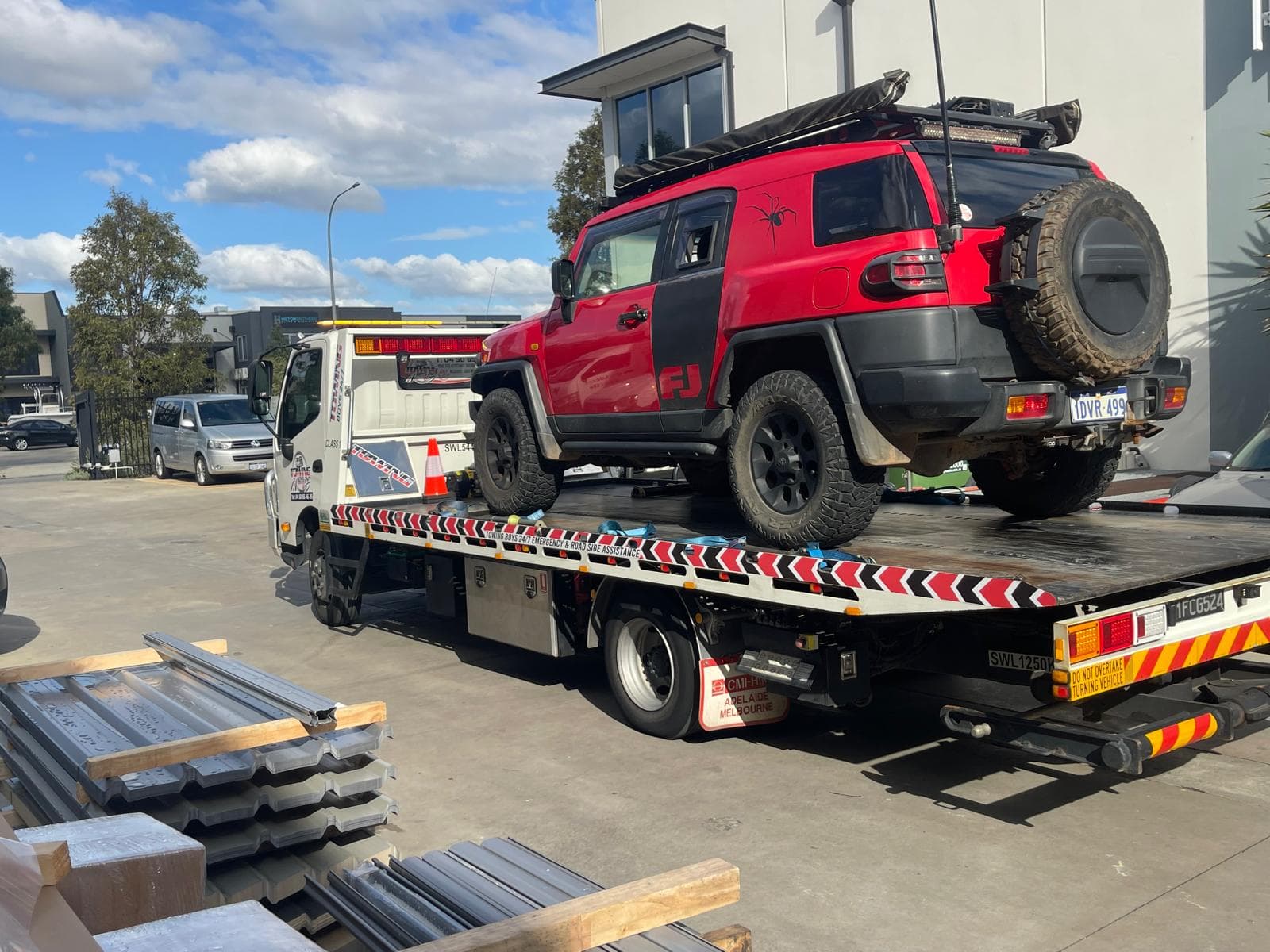
The coastal strip from Mindarie up through Quinns Rocks and Jindalee is beautiful and it is soft. Every summer weekend, someone drops a wheel off a firm track onto dry sand and discovers the difference between a 4WD and a 4WD with the right tyre pressures.
Sand recovery is one of the least glamorous jobs we do. It is slow, it is hot, and the actual pulling part takes about ninety seconds. Everything before that is what matters.
The call
Sunday, late afternoon, hot. A bloke has taken a dual-cab down a beach access track near Quinns, turned around to come back up, and buried it to the axles. He has been digging for forty minutes with a boat shovel. Four other people have already tried to push it. The tide is not an immediate problem, but it is not going the other way either.
The two questions that decide the whole job:
- 1How far off the firm track is the vehicle? Ten metres is a different job to sixty. A recovery truck does not follow you onto soft sand — that just gives you two stuck vehicles and a much larger bill.
- 2Is the vehicle sitting on the sand, or in it? If the chassis or diffs are resting on sand, the wheels have nothing to work with and no amount of throttle will help.
The mistakes that make it worse
- Spinning the wheels. Every second of wheelspin digs the vehicle deeper and packs sand harder under the chassis. If you are not moving after two seconds of gentle throttle, stop.
- Leaving tyre pressures at road level. Dropping pressures is the single most effective thing a driver can do on sand, and almost nobody does it until they are already stuck.
- Being towed out by a mate's car. A soft recovery point, a snatch strap on a tow ball, or a vehicle without a rated recovery point is genuinely dangerous. Recovery gear fails under load and it fails fast.
- Digging without clearing ahead. Digging around the wheels does very little if the vehicle still has to climb out of a trench. Clear a ramp in the direction of travel.
How the recovery ran
We parked on firm ground well back from the soft stuff and worked out to the vehicle rather than driving to it. The order was:
- 1Walked the ground first to find where the firm sand actually ended — it is never where it looks like it ends.
- 2Cleared sand from ahead of the wheels and from under the chassis so the vehicle had somewhere to go rather than something to climb.
- 3Dropped his tyre pressures properly. This alone changed the footprint enough to matter.
- 4Ran the winch line out to a rated recovery point on the front of the chassis — not the tow ball, not the bull bar tube.
- 5Winched slowly and steadily while he feathered the throttle in low range. Steady wins. Sharp yanks break things.
Total time on site: a bit over an hour. Time actually winching: about a minute and a half. That ratio is normal, and anybody who tells you a beach recovery is a quick job has not done many.
When it becomes a tow instead of a recovery
Sometimes the vehicle comes out and drives away. Sometimes salt water has been over the sills, or sand has gone somewhere it should not, and it goes on the tray instead. Anything that has been sitting in salt water — even briefly — should be looked at properly rather than driven home and forgotten about.
Either way, we can do both on the one call-out. That is what vehicle recovery covers, and 4WD and SUV towing handles the heavier vehicles that will not fit a standard tray comfortably. The Quinns Rocks page covers the coastal strip we run daily.
If you drive on the sand up here
- Drop your tyre pressures before you get on the sand, not after you are stuck.
- Know where your rated recovery points are — front and rear. Look now, not with a shovel in your hand.
- Carry a proper shovel and rated gear if you go beyond firm tracks.
- Go with someone. The recovery is easier and the afternoon is safer.
- If you are stuck and the tide is coming in, call immediately. That timeline is the one thing we cannot negotiate with.
Need a truck now?
Open 24 hours a day, 7 days a week. If we miss your call, we'll call you back within 30 minutes.
Questions we get asked about this
Can a tow truck drive onto the sand to reach me?
No, and it should not try. A recovery truck works from firm ground and reaches out to the bogged vehicle with a winch line. Driving a heavy truck onto soft sand just creates a second stuck vehicle.
Do you do beach and sand recoveries at night?
Yes. Sand recovery at night is slower because we have to work the ground with lights, but it is a normal call for us and the tide does not wait for daylight.
My 4WD has been in salt water — should I still drive it?
Get it looked at rather than driving it home and hoping. Salt water in the wrong place causes damage that shows up weeks later, and we can tray it straight to a workshop instead.