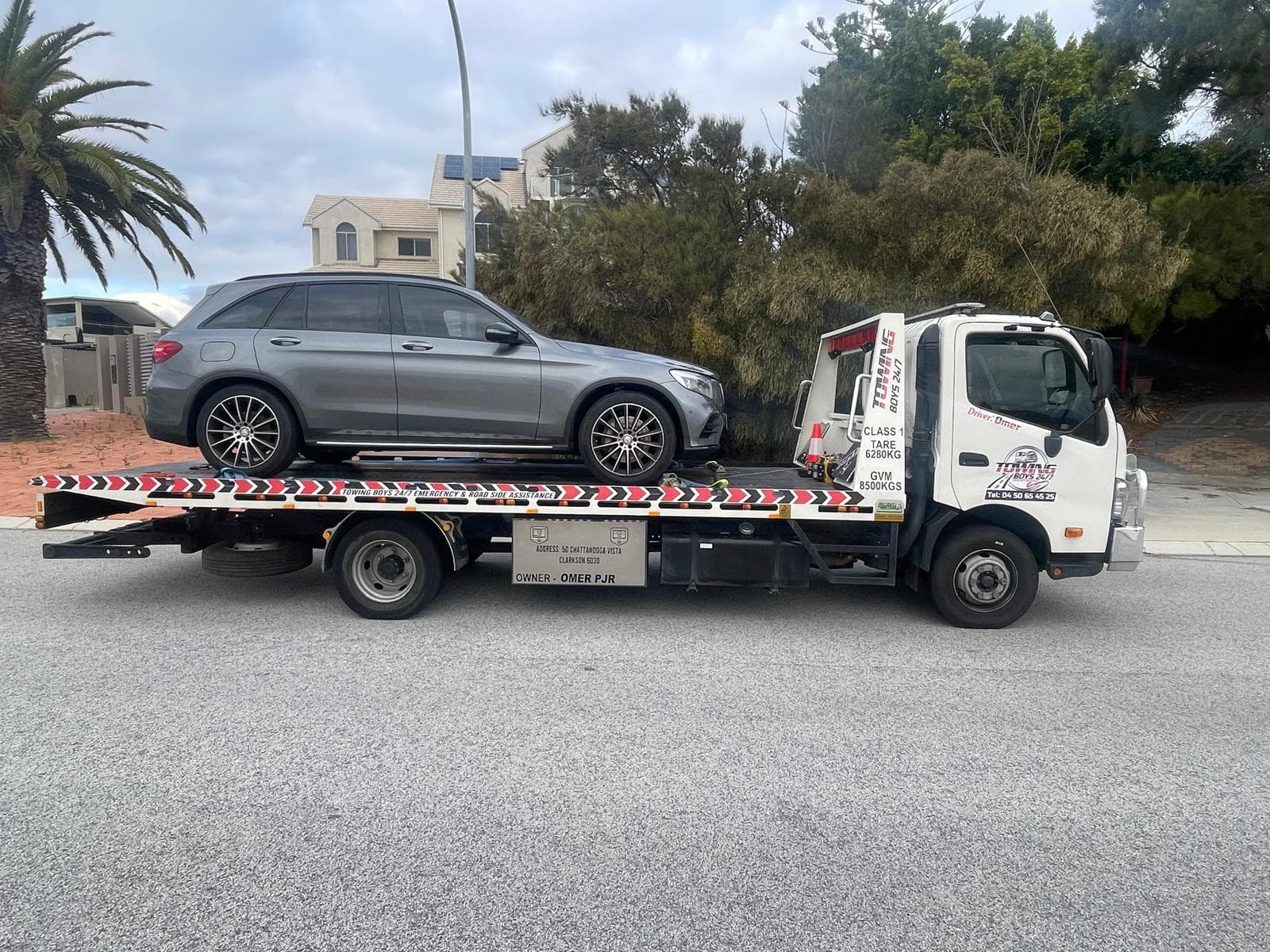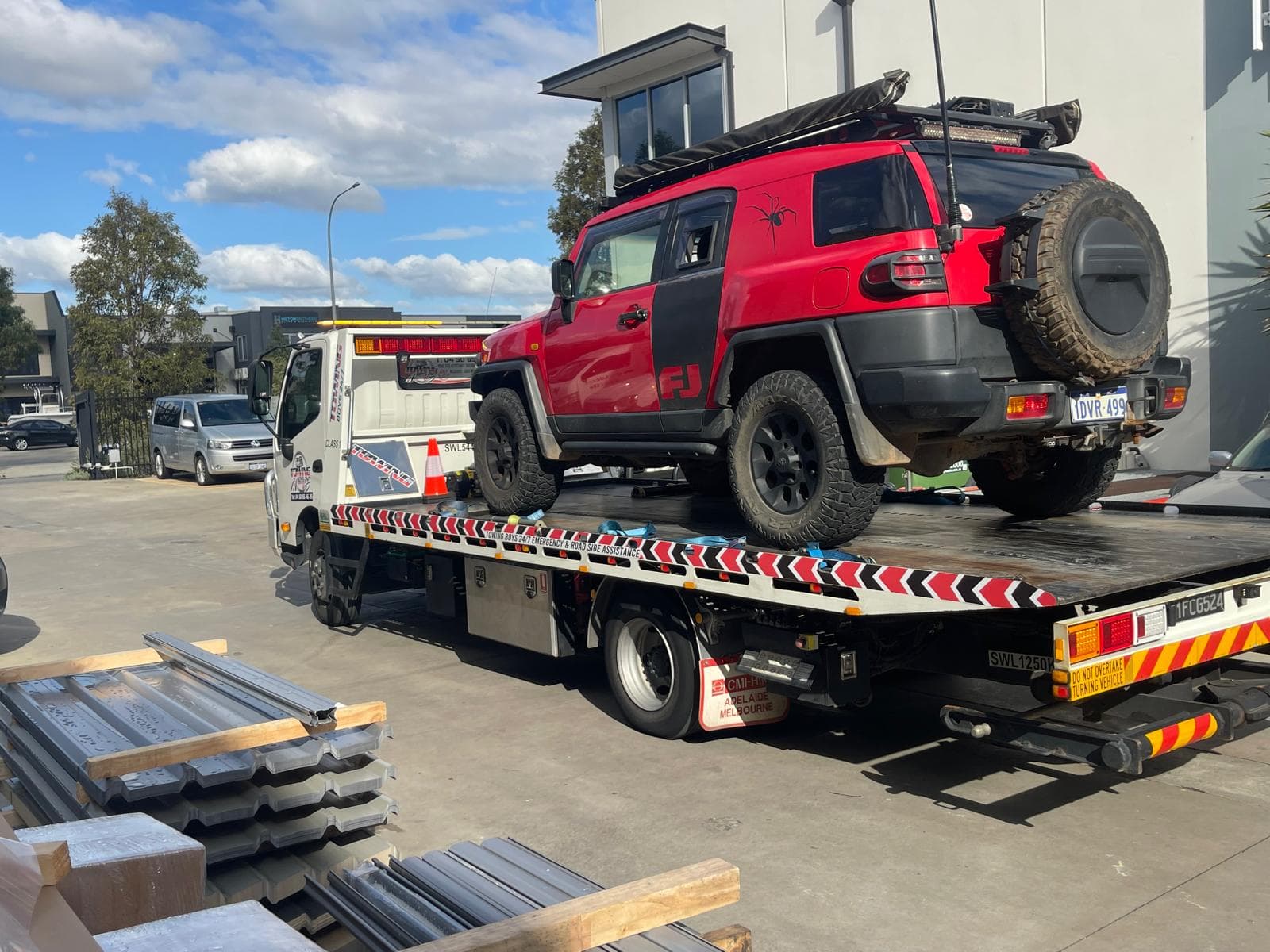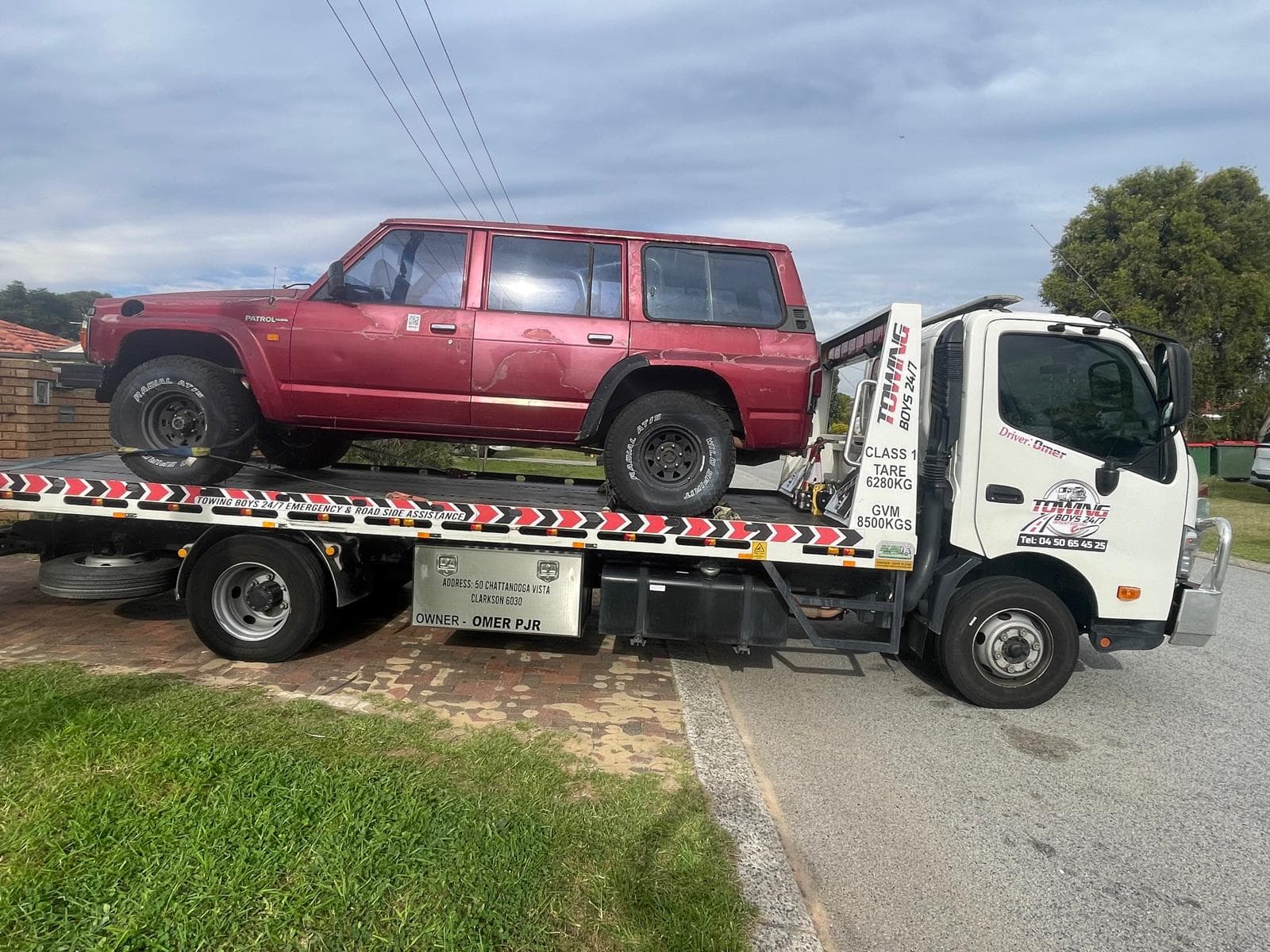
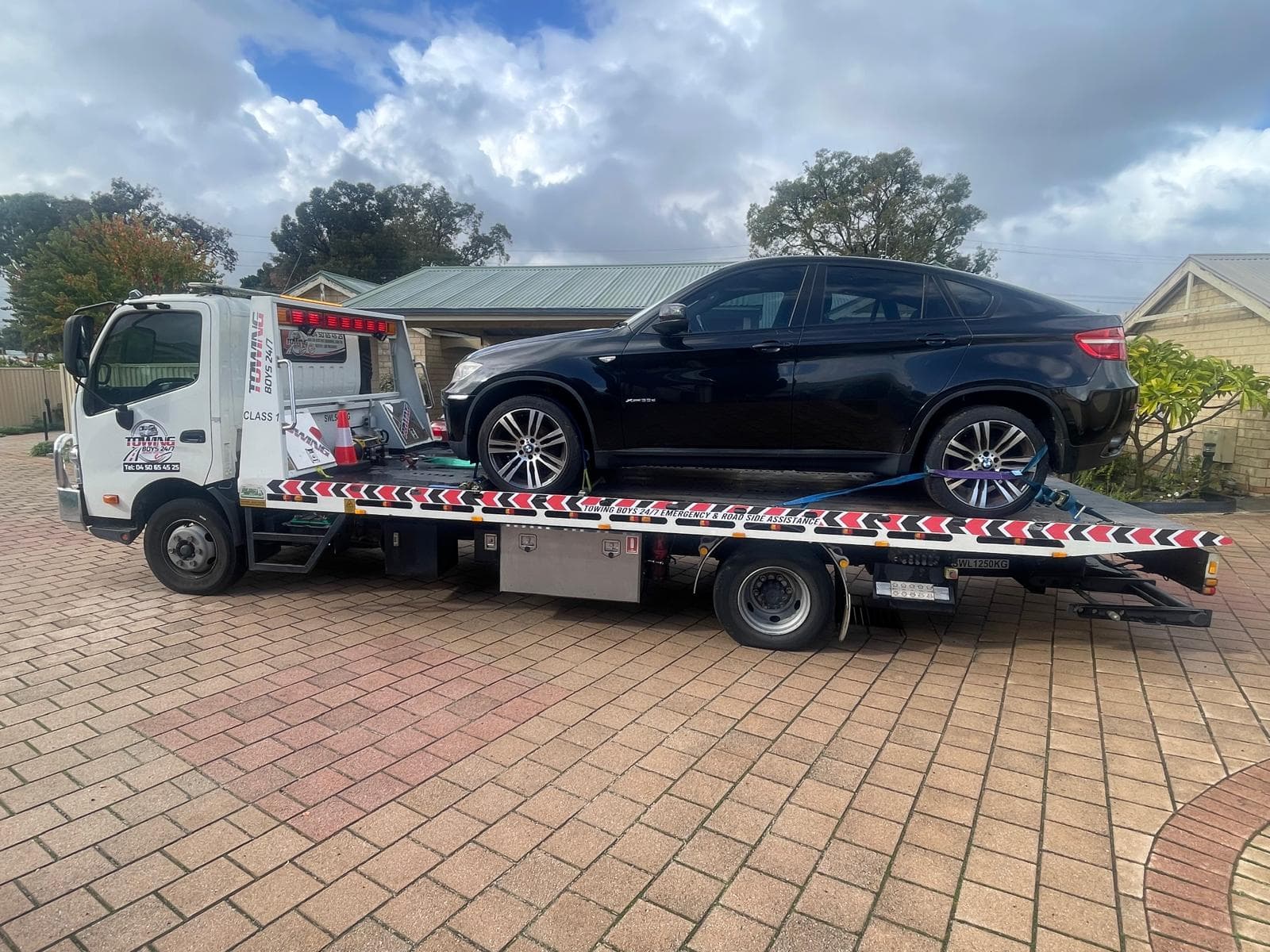
There are two ways to load a low car onto a tilt tray. One takes four minutes and leaves a scrape along the front lip that the owner will notice within ten seconds of it coming off. The other takes fifteen minutes and does not.
Prestige and classic transport is not a different truck. It is the same tray with a great deal more patience applied to it, plus a few pieces of gear that exist purely to buy back a couple of degrees of ramp angle.
The approach angle problem
When a tilt tray deck slides down and tips, it forms a ramp. The angle where the ramp meets the road is where low cars get damaged — front lips, splitters, exhausts and undertrays all sit lower than people think.
The things that change that angle, in order of how much they help:
- Where the truck is parked. A slight downhill behind the tray reduces the break angle. A gutter at the wrong point makes it worse. This is chosen before anything else, and it is why we will sometimes move the truck three times before loading.
- Timber or ramp blocks under the deck lip. They soften the transition where the ramp meets the ground.
- Winching rather than driving on. Slow, controlled, straight, with someone watching the front lip the whole way. A car driven on under its own power arrives at that angle faster than anyone can react.
- Where the car sits on the deck. Position affects the angle it comes off at as well as on. The unload is where damage usually happens, because everyone has relaxed by then.
Why Fremantle specifically
Fremantle has a genuinely high concentration of interesting cars, and a street layout that predates any of them. The old port streets, the West End, and the residential terraces around South Fremantle come with:
- Narrow one-way streets where a truck cannot easily reposition once committed.
- Limestone kerbs and uneven cobbled surfaces that change the break angle by more than you would guess.
- Right-angle laneways and rear access behind terraces, some of which will not take a truck at all.
- Genuinely limited parking, which means the loading spot is often a short walk from the car rather than outside it.
The practical consequence: we would rather look at the pickup spot on a map before the day, and for a booked prestige move we usually do. Turning up blind to a Fremantle laneway with a low car is how a fifteen-minute job becomes an afternoon.
What we get asked to move
- 1Cars going to and from restorations. Frequently non-running, frequently without brakes, which changes everything about how it is winched and secured.
- 2Show and event moves. Concours, club runs, static displays. Owners who would rather the car did not do the kilometres.
- 3Sales and inspections. A car sold interstate or across town that needs to arrive looking exactly as it did when it left.
- 4Modern prestige and performance cars. Low, wide, expensive, and often with no usable spare and very little ground clearance.
What we need from you
- Ground clearance and any known low points. A splitter, a low exhaust, an aftermarket kit. Tell us before, not while it is on the ramp.
- Does it run, does it steer, does it brake? All three are separate questions and each changes the method.
- Any modifications. Suspension changes, no jacking points, aftermarket wheels — all relevant.
- Both addresses, and what the access is like at each end. Especially the driveway. Steep driveways are their own conversation.
That is what prestige and classic transport covers, and tilt tray towing explains why the flatbed is the only sensible way to move a low car. The Fremantle page has the local coverage detail.
Need a truck now?
Open 24 hours a day, 7 days a week. If we miss your call, we'll call you back within 30 minutes.
Questions we get asked about this
Can you transport a car that is too low for a normal tow truck?
Usually yes. Ramp blocks, careful truck positioning and winching the car on slowly rather than driving it on buy back the clearance that matters. Tell us the ground clearance and any low points when you book.
How do you secure a classic car so it is not damaged?
Over the wheels and tyres rather than hooked to suspension or chassis points. Wheel straps hold the car by the part designed to take load and leave nothing behind on paint or underbody.
Can you move a car that does not run or has no brakes?
Yes — it is common with restoration projects. It changes how the car is winched on and how it is controlled coming off, so tell us upfront whether it runs, steers and brakes. Those are three separate answers.