
The Mitchell Freeway north of Burns Beach is fast, open, and has long stretches where there is nothing much either side of you. When something lets go up there — a tyre, a belt, a cooling system — the breakdown itself is rarely the dangerous part. Where the car stops and where the driver stands is.
This one is written as a guide rather than a story, because the sequence genuinely matters and most people have never had to think about it before the day they need it.
The first sixty seconds
- 1Hazards on straight away. Before you diagnose anything. It is the cheapest thing you can do and it buys you attention from the traffic behind.
- 2Keep rolling if you can, and go left. A car that coasts to the left shoulder is safe. A car that stops in lane two is a serious problem. Do not brake hard to look at the dash — use the momentum you have to get across.
- 3Get as far left as the shoulder allows. Wheels off the line, as close to the barrier or verge as you can manage without dropping into soft sand.
- 4Everyone out on the left side, over the barrier if there is one. Not standing beside the car, not sitting in the car, and definitely not standing in front of it on the shoulder.
- 5Then call. From behind the barrier, with the freeway on-ramp or exit number if you can see one.
Telling us where you are, on a road with no landmarks
This is the hardest part of freeway jobs. Long straight stretches all look identical, especially at night. What actually helps:
- Direction of travel. Northbound or southbound. Everything else depends on this — the freeway is not a road we can just cross.
- The last exit you passed, or the next one you can see signed. Butler, Neerabup Road, Hester Avenue, Burns Beach Road — these are far more useful than an estimated distance.
- Which side. Left shoulder, right shoulder, or a lane. It changes how we approach.
- Anything fixed nearby. An overpass, a gantry, a noise wall ending, an emergency phone marker. If your phone can drop a pin, that solves it outright.
How we load a car on a freeway shoulder
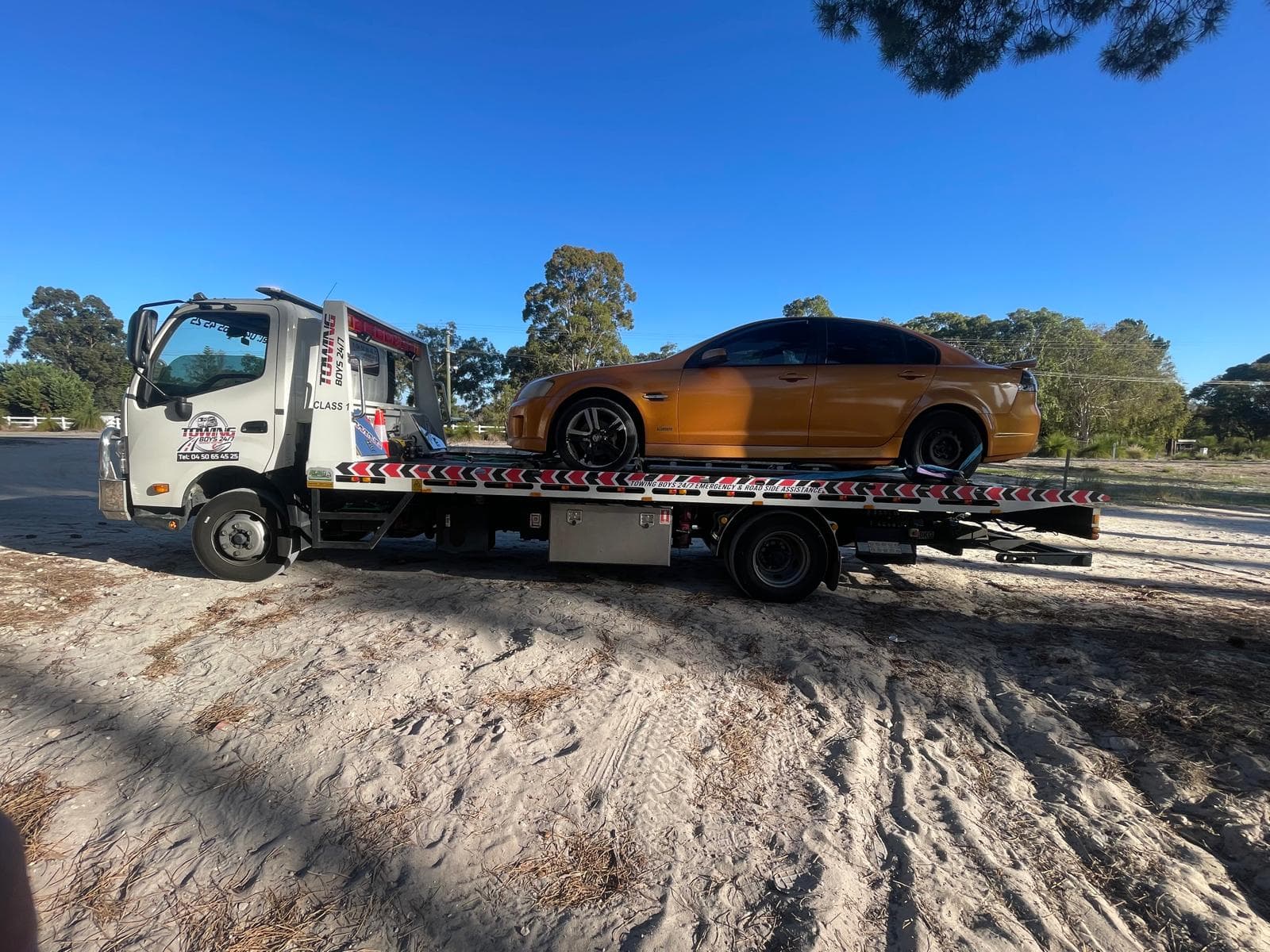
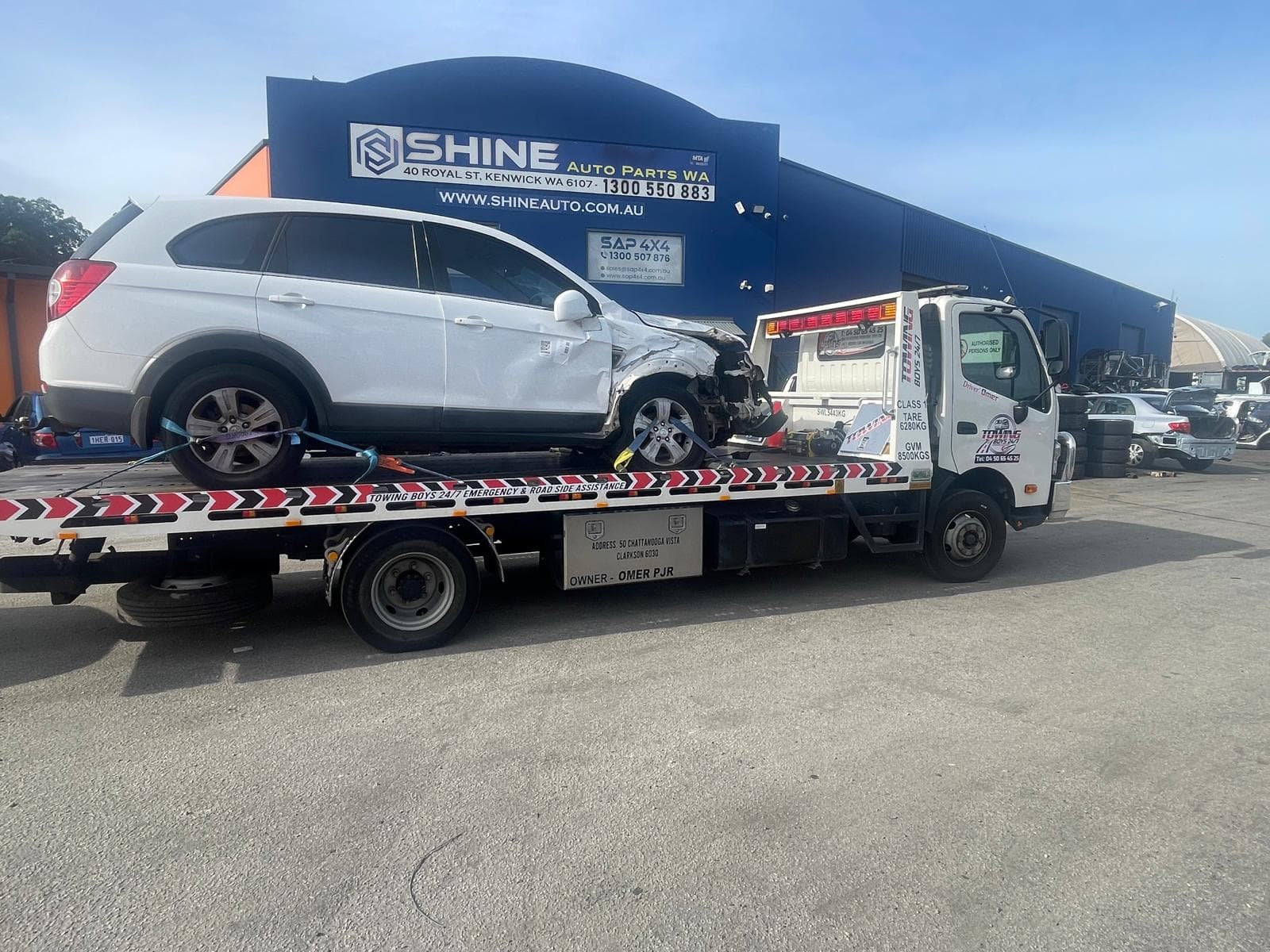
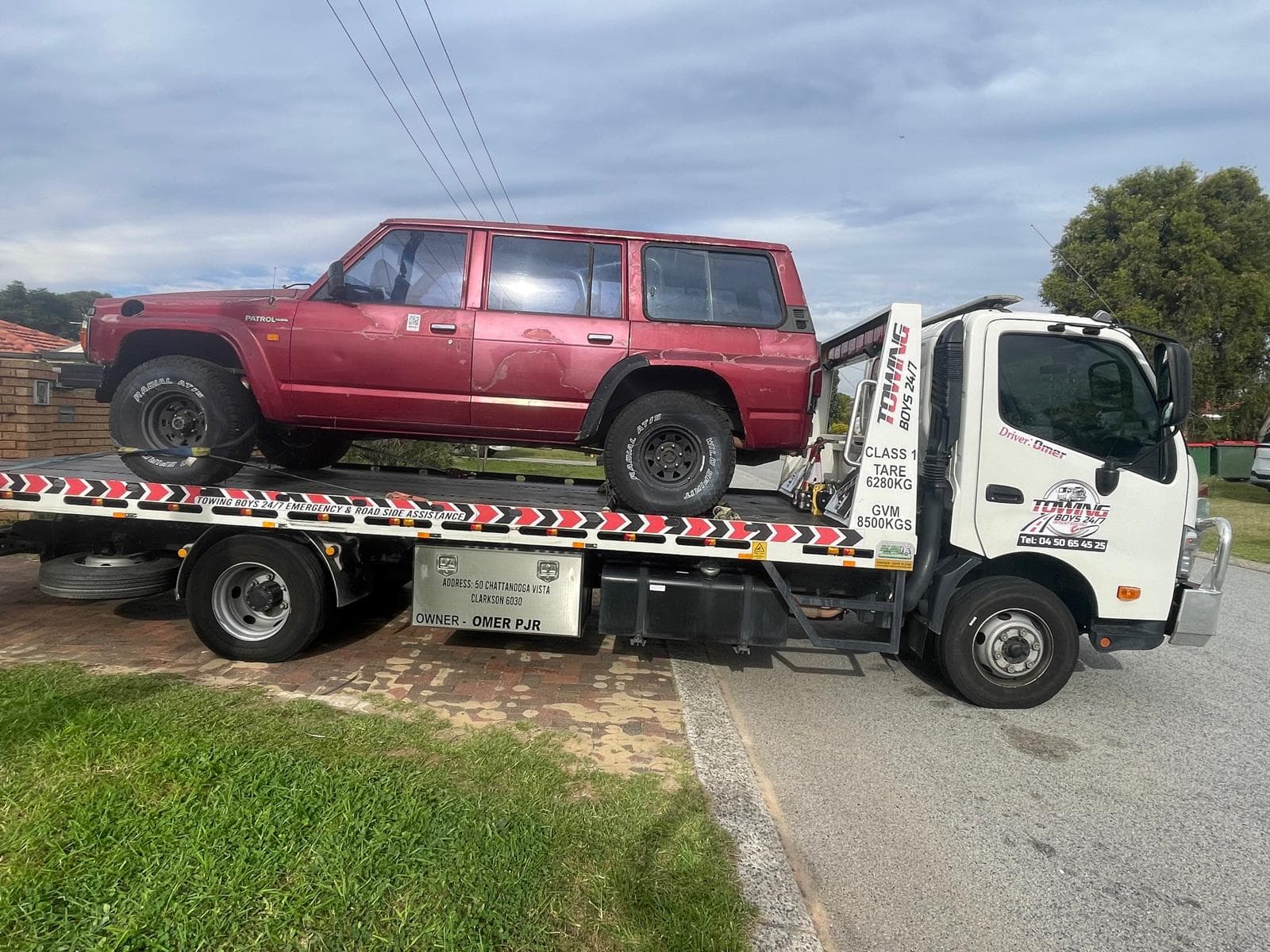
Differently, and more carefully, than anywhere else. The truck goes in front of your car with its own hazards and beacons running, which puts a large marked vehicle between the traffic and the person working. The whole load is planned to happen on the shoulder in one continuous movement, without anyone stepping into a running lane and without the car needing to be repositioned.
If the car is in a running lane rather than on the shoulder, that becomes a different job — and one where we may want traffic managed before anything else happens. Tell us that on the phone, because it changes what we send and what we do first.
What we see most on the Butler–Alkimos stretch
- Tyre failures. It is a high-speed stretch of road with a lot of new estates and a lot of tyres that have quietly aged out.
- Overheating in summer, especially on the long northbound climb out of the Burns Beach corridor with the air conditioning working hard.
- Fuel. The distance between fuel stops up there catches out more people than anyone admits. Running dry on a freeway is a tow, not an errand.
- Commuter cars doing the long Yanchep-to-city run that have simply had enough kilometres put through them in a short time.
We run this corridor every day — see the Butler and Alkimos pages for the local detail, or emergency towing for what happens on a call like this one.
Need a truck now?
Open 24 hours a day, 7 days a week. If we miss your call, we'll call you back within 30 minutes.
Questions we get asked about this
Should I stay in my car on the freeway shoulder?
No, if you can safely get out on the left and stand well away from the car, ideally behind a barrier. The exception is if you are stopped in a running lane and cannot exit safely — then stay belted in with hazards on and tell us that when you call.
How do I tell you where I am on the Mitchell Freeway?
Direction of travel first, then the last exit you passed or the next one signed ahead, then which shoulder you are on. If you can drop a location pin from your phone, that answers everything at once.
Do you tow from the freeway at night?
Yes, and freeway jobs at night are handled the same way with beacons running and the truck positioned to shield the work. Getting a car off a freeway shoulder is not something worth waiting until morning for.